Why Every Business Needs SEO, Social Media & Paid Ads Together in 2026 ?
The Integrated digital marketing world is changing faster than ever. In 2026, simply having a website or posting occasionally on social media is no longer enough to grow a business. Customers now search on Google, discover brands on Instagram, compare products through YouTube videos, and often make purchasing decisions after seeing multiple online touchpoints.
This shift means businesses need more than a single marketing channel. They need an integrated digital marketing strategy that combines SEO, social media marketing, and paid advertising to create a seamless customer journey.
Many businesses still ask questions like:
- Should I invest in SEO or Google Ads?
- Is social media enough to generate leads?
- Can paid ads replace organic marketing?
The answer in 2026 is simple—you need all three working together.
When SEO, social media, and paid ads support each other, businesses experience better visibility, higher-quality traffic, improved brand trust, and stronger ROI. This combination creates a complete marketing ecosystem that delivers sustainable online business growth.
In this guide, we’ll explain why every business should adopt an SEO + PPC strategy supported by powerful social media marketing.
1. What is Integrated Digital Marketing?
Integrated digital marketing is the process of combining multiple online marketing channels into one unified strategy.
Instead of treating SEO, social media, email marketing, content marketing, and paid advertising separately, businesses align them to achieve common goals.
An integrated approach ensures customers receive a consistent experience whether they:
- Search on Google
- Browse Instagram
- Watch YouTube
- Click Facebook Ads
- Visit your website
- Read your blog
Every marketing channel supports another, making your brand stronger and easier to trust.
2. Why Single-Channel Marketing No Longer Works
Consumer behavior has changed dramatically.
Today’s customer journey looks like this:
Step 1
Searches Google for a solution.
Step 2
Finds your website.
Step 3
Checks your Instagram profile.
Step 4
Reads customer reviews.
Step 5
Sees your retargeting ad.
Step 6
Returns to your website.
Step 7
Becomes your customer.
If your business only focuses on one channel, you’re likely losing customers at multiple stages of this journey.
The Power of SEO in 2026
Search Engine Optimization (SEO) remains one of the most valuable long-term investments for businesses.
SEO helps your website rank higher on Google when people search for products or services related to your business.
Benefits of SEO
1. Consistent Organic Traffic
Unlike paid ads, SEO continues bringing visitors without paying for every click.
2. Higher Trust
Most users trust websites appearing naturally in Google search results.
3. Better User Experience
Modern SEO improves:
- Website speed
- Mobile responsiveness
- Navigation
- Content quality
4. Long-Term Results
A well-optimized website can generate leads for years.
3. Why Social Media Marketing Matters More Than Ever
People spend several hours daily on platforms like Instagram, Facebook, LinkedIn, YouTube, and X.
Businesses that actively engage audiences through social media marketing build stronger relationships and increase brand visibility.
Social Media Helps Businesses
Build Brand Awareness
Regular content keeps your business visible.
Increase Customer Engagement
Likes, comments, polls, stories, and reels encourage conversations.
Showcase Expertise
Educational posts establish authority in your industry.
Build Trust
Customer testimonials and behind-the-scenes content improve credibility.
Drive Website Traffic
Every social media platform becomes another source of visitors.
Paid Ads Deliver Instant Results
SEO requires patience.
Social media requires consistency.
Paid advertising delivers immediate visibility.
Google Ads, Meta Ads, LinkedIn Ads, and YouTube Ads allow businesses to reach highly targeted audiences quickly.
Advantages of Paid Advertising
- Instant website traffic
- Lead generation
- Product sales
- Brand awareness
- Geographic targeting
- Audience segmentation
- Remarketing opportunities
However, paid ads work best when supported by SEO and social media.
4. Why SEO + PPC Strategy Works Better Together
Many businesses think SEO and PPC compete with each other.
In reality, the best-performing businesses combine them into a powerful SEO + PPC strategy.
SEO Builds Long-Term Authority
SEO generates sustainable traffic over time.
PPC Generates Immediate Visibility
Paid ads deliver instant exposure while SEO gains momentum.
Together They Dominate Search Results
Imagine your business appearing:
- At the top through Google Ads
- Again through organic SEO rankings
This doubles your visibility and increases customer trust.
5. How Social Media Strengthens SEO and Paid Ads
Although social media isn’t a direct Google ranking factor, it strongly supports both SEO and advertising.
More Content Visibility
Every blog can become:
- Instagram Carousel
- LinkedIn Article
- Facebook Post
- YouTube Short
- Reel
One blog creates multiple content opportunities.
Higher Brand Searches
People who discover you on Instagram often search your business on Google later.
More branded searches improve overall online authority.
Better Ad Performance
Businesses with active social profiles usually achieve:
- Higher click-through rates
- Better conversion rates
- Lower advertising costs
Customers trust familiar brands.
6. The Complete Customer Journey in 2026
Let’s understand how all three channels work together.
Stage 1: Discovery
A customer searches Google.
SEO helps your website appear.
Stage 2: Research
The customer visits your website.
They later check your Instagram.
Your social media marketing builds confidence.
Stage 3: Reminder
The customer leaves without buying.
Meta Ads and Google Remarketing show your ads again.
Stage 4: Conversion
The customer returns and purchases your product or books your service.
This entire process is only possible with integrated digital marketing.
7. Industries That Benefit the Most
Every business can benefit from combining SEO, social media, and paid ads.
Examples include:
Real Estate
Generate quality property leads.
Healthcare
Increase patient appointments.
Education
Boost admissions and inquiries.
Restaurants
Drive reservations and online orders.
Fashion Brands
Increase website sales.
Automobile Showrooms
Generate test-drive bookings.
Gyms
Attract membership registrations.
Salons
Increase appointment bookings.
Hotels
Boost direct reservations.
E-commerce Stores
Increase product sales with lower acquisition costs.
8. Common Mistakes Businesses Still Make
Many businesses still depend on only one marketing channel.
Common mistakes include:
Only Running Ads
Traffic stops when the budget ends.
Only Doing SEO
Growth takes longer without paid visibility.
Posting Random Social Media Content
Without strategy, engagement rarely converts into sales.
Ignoring Website Optimization
Marketing efforts fail if the website provides a poor experience.
No Tracking
Without analytics, businesses cannot measure ROI.
9. How to Build an Effective Integrated Digital Marketing Strategy
An effective integrated digital marketing plan includes:
1. Strong Website
Your website should be:
- Mobile-friendly
- Fast
- Secure
- SEO optimized
2. Keyword Research
Target keywords your customers actually search.
Create content answering their questions.
3. Consistent Content Marketing
Publish blogs regularly.
Convert each blog into:
- Reels
- Shorts
- Infographics
- Carousels
- LinkedIn posts
4. SEO Optimization
Focus on:
- Technical SEO
- On-page SEO
- Local SEO
- Content SEO
- Internal linking
5. Social Media Marketing
Maintain consistent branding across platforms.
Post educational, promotional, and engaging content.
6. Paid Advertising
Use Google Ads and Meta Ads for:
- Lead generation
- Remarketing
- Sales campaigns
- Brand awareness
7. Performance Analysis
Track important metrics like:
- Organic traffic
- Click-through rate
- Conversion rate
- Bounce rate
- Cost per lead
- Return on ad spend
Optimize campaigns regularly.
10. Benefits of Combining SEO, Social Media & Paid Ads
Businesses using all three channels together enjoy:
- Higher Google rankings
- Better brand recognition
- Increased website traffic
- More qualified leads
- Lower customer acquisition costs
- Improved customer trust
- Higher conversion rates
- Stronger online authority
- Better return on investment
- Sustainable online business growth
The Future of Digital Marketing in 2026
Artificial Intelligence, voice search, AI-powered search experiences, personalization, and predictive analytics are reshaping digital marketing.
However, one thing remains constant:
Customers interact with brands across multiple platforms before making a purchase.
Businesses that continue relying on only one marketing channel will struggle to compete.
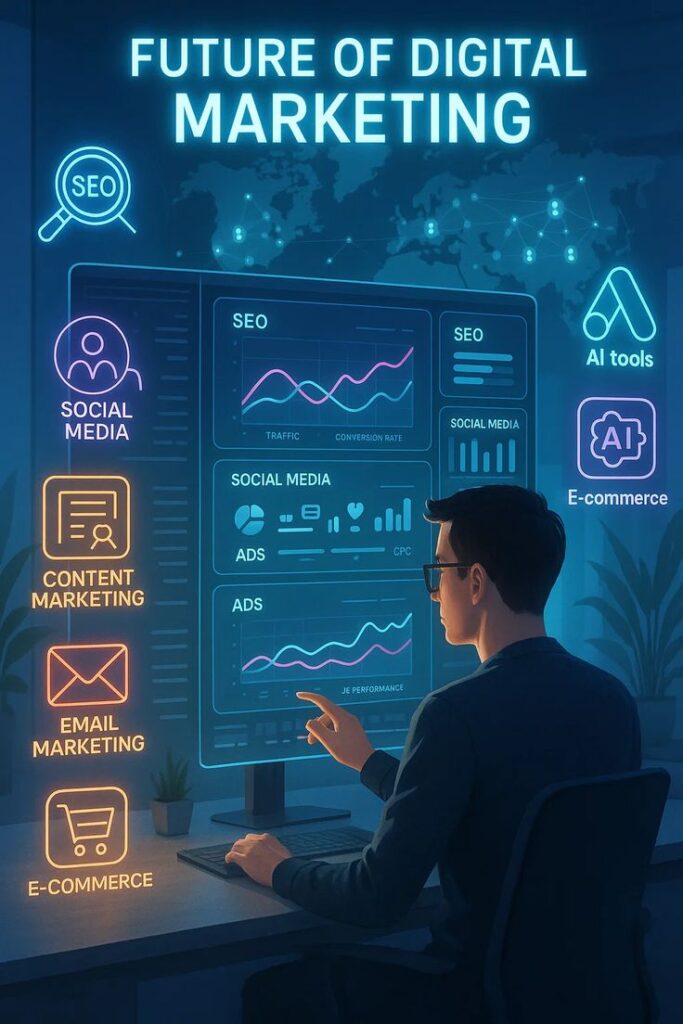
The future belongs to businesses adopting integrated digital marketing, where SEO, social media marketing, and paid advertising work together to deliver a unified customer experience.
Final Thoughts
In 2026, successful businesses no longer ask whether they should choose SEO, social media, or paid ads. The real question is how effectively they can combine all three.
SEO builds long-term visibility and authority, social media marketing strengthens relationships and keeps your audience engaged, while paid advertising delivers immediate reach and measurable results. Together, they create a complete SEO + PPC strategy that supports every stage of the customer journey—from discovery to conversion and retention.
If your goal is sustainable online business growth, now is the time to invest in an integrated digital marketing approach. Businesses that align these channels will attract more qualified traffic, generate better leads, improve conversions, and stay ahead of the competition in 2026 and beyond.
Whether you’re a startup, local business, service provider, or enterprise, combining SEO, social media, and paid ads isn’t just a trend—it’s the foundation of successful digital marketing today.
Frequently Asked Questions (FAQs)
Q1. Why should businesses use SEO, social media, and paid ads together?
Using all three creates an integrated digital marketing strategy that improves visibility, builds trust, drives targeted traffic, and increases conversions across the customer journey.
Q2. Is SEO still important in 2026?
Yes. SEO remains essential for generating long-term organic traffic, improving website authority, and helping businesses appear in Google search results without paying for every click.
Q3. What is an SEO + PPC strategy?
An SEO + PPC strategy combines organic search optimization with paid advertising. SEO delivers sustainable traffic, while PPC provides immediate visibility, helping businesses maximize their online reach and ROI.
Q4. How does social media marketing support online business growth?
Social media marketing increases brand awareness, engages potential customers, drives website traffic, and builds trust, making it an important part of long-term online business growth.
Q5. Which businesses benefit most from integrated digital marketing?
Almost every industry—including real estate, healthcare, education, retail, automotive, hospitality, e-commerce, and professional services—can benefit from an integrated approach that combines SEO, social media, and paid advertising.
15 Digital Marketing Trends Every Business Must Follow in 2026
The world of digital marketing is changing faster than ever. What worked in 2025 may not deliver the same results in 2026. Search engines are becoming smarter, Artificial Intelligence (AI) is transforming marketing strategies, and customer expectations continue to evolve.
Whether you’re a startup, local business, eCommerce store, healthcare clinic, educational institute, real estate company, or enterprise brand, staying updated with the latest digital marketing trends is essential for growth.
In this guide, we’ll explore the 15 biggest digital marketing trends in 2026 that every business should follow to increase website traffic, generate quality leads, improve customer engagement, and stay ahead of competitors.
If you’re looking to understand the future of digital marketing, this blog covers everything in simple and easy-to-understand language.
Why Digital Marketing Trends Matter in 2026
Digital marketing is no longer just about running Facebook ads or posting regularly on Instagram.
Today, businesses need a complete digital strategy that includes:
- AI-powered marketing
- SEO optimization
- High-quality content
- Short-form videos
- Personalized customer experiences
- Automation
- Data-driven decision-making
Companies that adapt to the latest marketing trends will attract more customers while businesses using outdated strategies may struggle to compete.
1. AI Marketing is Becoming the New Standard
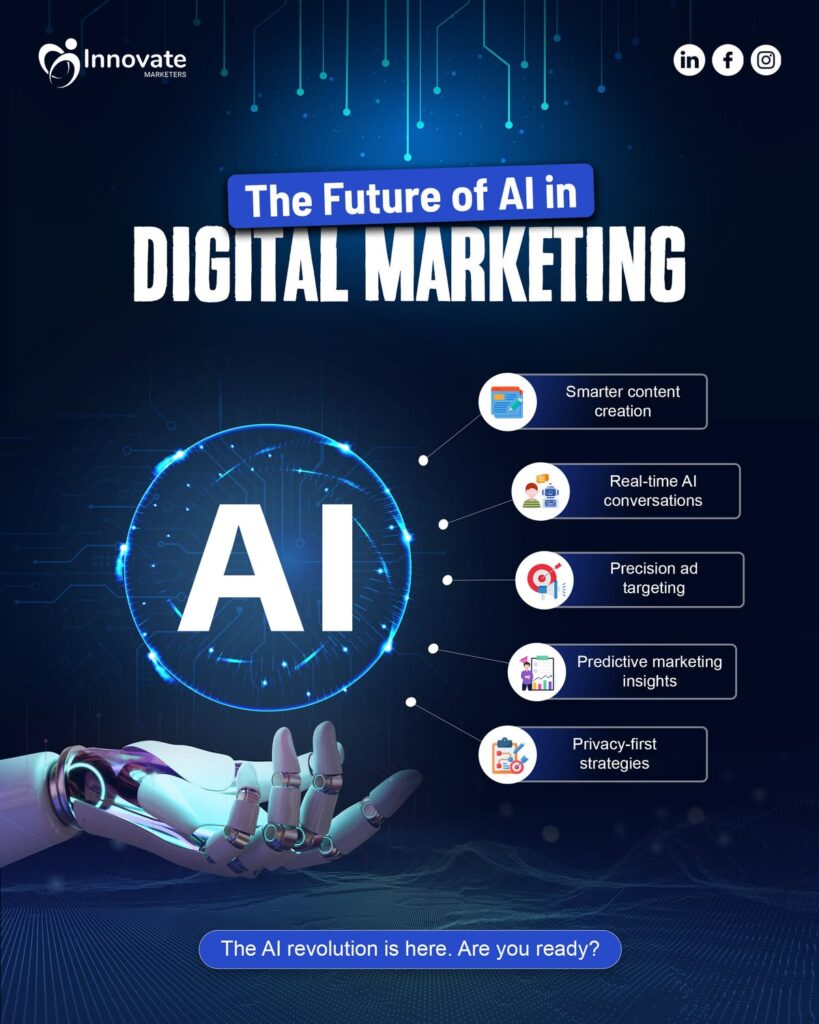
Artificial Intelligence is no longer a future concept—it’s already transforming the way businesses market their products and services.
In 2026, AI marketing helps businesses:
Benefits of AI Marketing
- Generate content faster
- Create ad copies
- Design social media posts
- Personalize email campaigns
- Analyze customer behavior
- Predict future buying patterns
- Improve customer support using AI chatbots
Businesses using AI save time while improving marketing performance.
Why it matters: AI marketing increases productivity, improves customer experience, and reduces marketing costs.
2. SEO is Now More User-Focused Than Ever
Google’s algorithms continue to prioritize content that genuinely helps users.
Instead of stuffing keywords, businesses should focus on:
Modern SEO Strategy
- Helpful content
- Fast-loading websites
- Mobile-friendly design
- Strong internal linking
- Quality backlinks
- Better user experience
- Clear website structure
The future of SEO is about answering users’ questions better than your competitors.
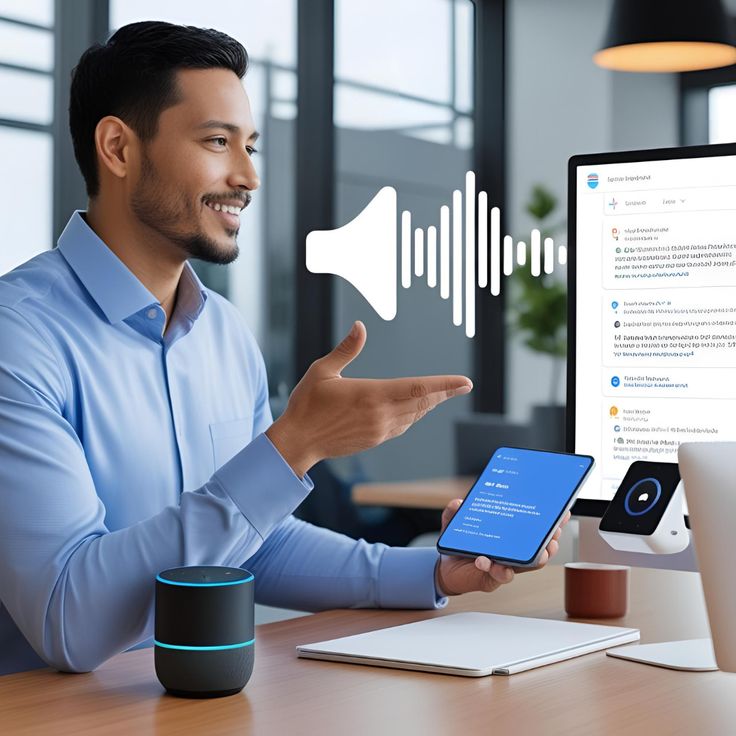
3. Voice Search Optimization Will Continue Growing
Millions of users now search using:
- Google Assistant
- Siri
- Alexa
Instead of typing,
People ask:
“Which is the best digital marketing agency near me?”
This means businesses should optimize their content for conversational keywords.
Tips
- Use natural language
- Add FAQ sections
- Answer direct questions
- Focus on local SEO
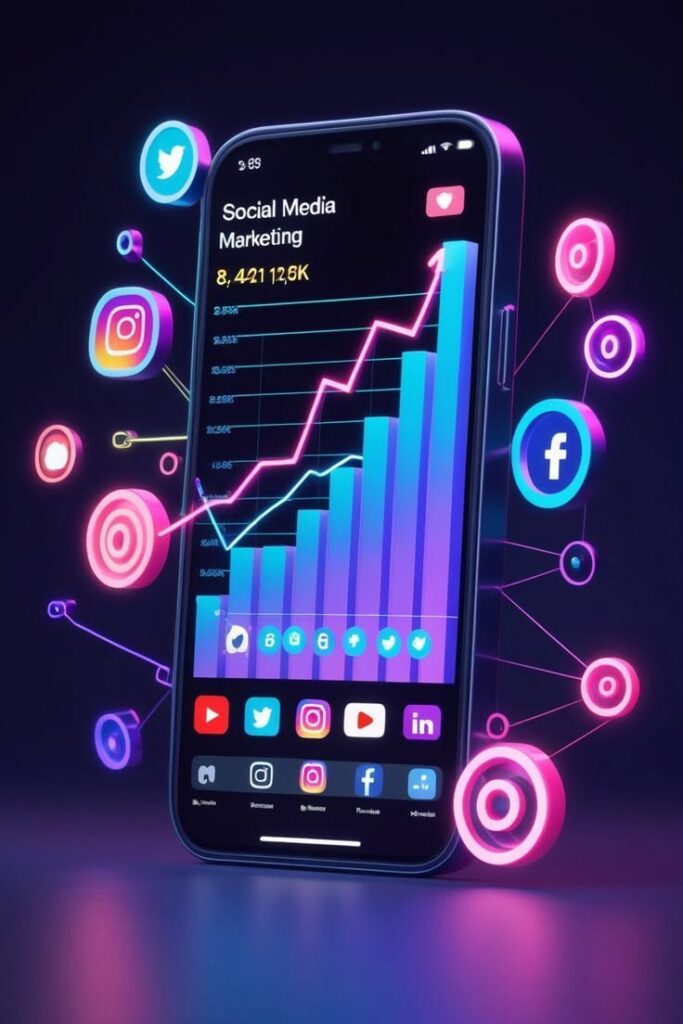
4. Short-Form Video Marketing Will Dominate
Platforms like:
- Instagram Reels
- YouTube Shorts
- Facebook Reels
- TikTok (where available)
continue to drive massive engagement.
Video content generates:
- Higher reach
- Better engagement
- More shares
- Better conversions
Businesses that consistently create educational and entertaining videos will grow much faster.
5. Personalization Will Become More Important
Customers expect personalized experiences.
Instead of sending the same message to everyone, businesses should personalize:
Personalized Marketing Includes
- Email campaigns
- Product recommendations
- Website content
- Ads
- SMS campaigns
Personalization improves customer satisfaction and conversion rates.
6. First-Party Data Will Replace Third-Party Cookies
Privacy regulations are changing.
Businesses should focus on collecting their own customer data through:
- Website forms
- Newsletter subscriptions
- CRM software
- Loyalty programs
- Customer accounts
First-party data will become one of the most valuable business assets.
7. Social Commerce Will Continue Growing
People no longer just browse social media.
They shop directly from platforms like:
- YouTube
Businesses should build complete shopping experiences on social media.
Social commerce reduces buying friction and increases conversions.
8. Local SEO is More Powerful Than Ever
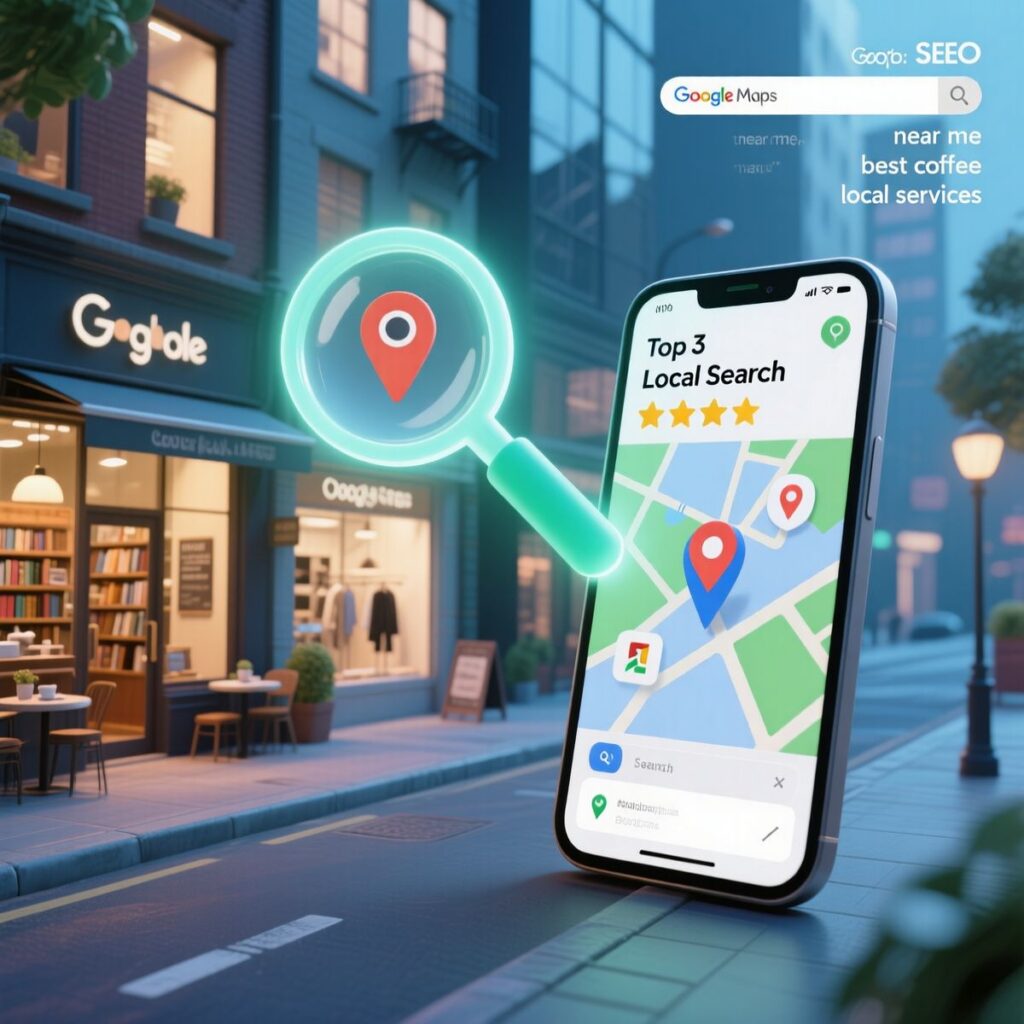
Local businesses must optimize their online presence.
This includes:
Local SEO Checklist
- Google Business Profile optimization
- Local keywords
- Customer reviews
- Business citations
- Location pages
- Local backlinks
When customers search:
“Digital marketing agency near me”
or
“Best dentist in Delhi”
Local SEO helps businesses appear in top search results.
9. Interactive Content Will Increase Engagement
Static content is slowly losing attention.
Businesses should create:
- Polls
- Quizzes
- Calculators
- Surveys
- Interactive videos
- Infographics
Interactive content keeps visitors engaged for longer periods.
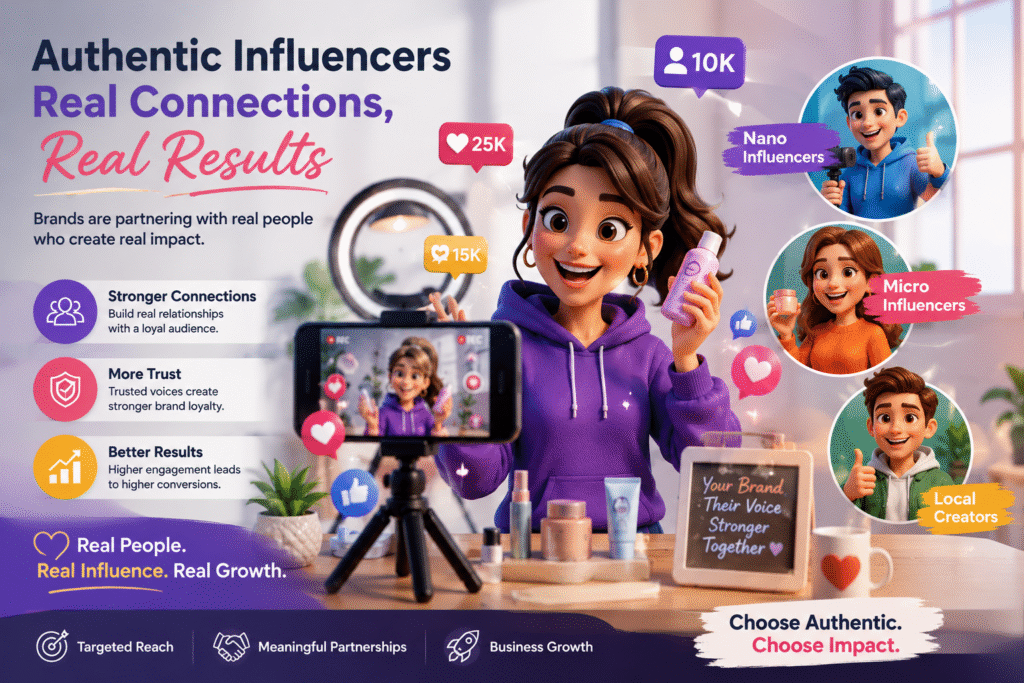
10. Influencer Marketing Will Become More Authentic
Instead of celebrity influencers, brands are increasingly working with:
- Nano influencers
- Micro influencers
- Local creators
These creators often have:
- Better engagement
- More trust
- Higher conversion rates
Authenticity matters more than follower count.
11. Marketing Automation Will Save Time
Automation helps businesses manage repetitive tasks efficiently.
Popular automation includes:
Automated Marketing
- Email sequences
- Lead nurturing
- CRM workflows
- Chatbots
- Appointment reminders
- Customer follow-ups
Automation allows marketing teams to focus on strategy rather than manual work.
12. Visual Search is Growing Rapidly
Search engines are becoming capable of understanding images.
Users can now upload photos to search for products.
Businesses should:
- Optimize image names
- Add alt text
- Compress images
- Use high-quality visuals
Visual SEO is becoming increasingly important.
13. Content Quality Will Beat Content Quantity
Publishing dozens of low-quality blogs no longer works.
Instead, businesses should focus on:
High-Quality Content
- Detailed guides
- Original research
- Case studies
- Expert insights
- Practical tips
- Real examples
Google rewards content that genuinely helps readers.
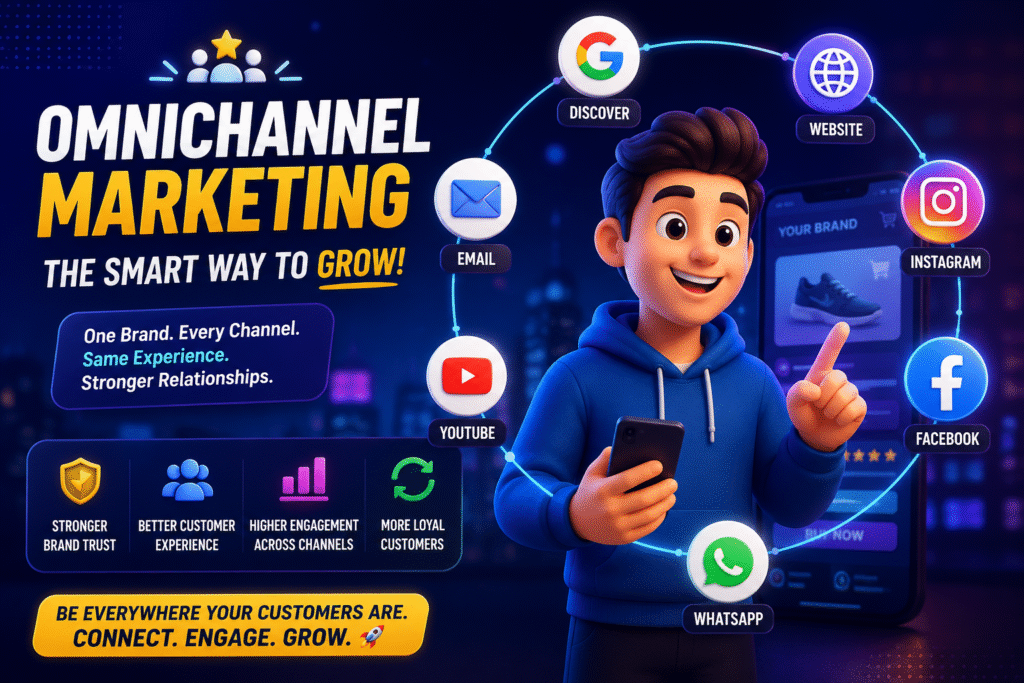
14. Omnichannel Marketing Will Become Essential
Customers interact with businesses across multiple platforms.
For example:
- Google Search
- Website
- YouTube
Businesses should provide a consistent experience across every platform.
This builds trust and improves customer retention.
15. Data Analytics Will Drive Better Marketing Decisions
Successful businesses don’t rely on guesswork.
They track:
- Website traffic
- Conversion rates
- Bounce rates
- Customer journeys
- ROI
- Campaign performance
Tools like Google Analytics, Search Console, Meta Ads Manager, and CRM dashboards help businesses make informed decisions.
Data-driven marketing leads to better results and higher returns on investment.
How Businesses Can Prepare for the Future of Digital Marketing
The future of digital marketing is all about combining technology with human creativity.
Businesses should:
Focus on:
- AI marketing
- Search Engine Optimization (SEO)
- Video marketing
- Customer experience
- Mobile optimization
- Website speed
- High-quality content
- Marketing automation
- Local SEO
- Data analytics
Companies that embrace these digital marketing trends will have a competitive advantage in 2026 and beyond.
Common Mistakes Businesses Should Avoid in 2026
Many businesses fail because they continue using outdated marketing strategies.
Avoid these mistakes:
- Ignoring AI tools
- Publishing low-quality content
- Not investing in SEO
- Poor website speed
- Inconsistent social media presence
- Running ads without tracking conversions
- Ignoring customer reviews
- Not optimizing for mobile users
- Avoiding video marketing
- Failing to analyze campaign performance
Final Thoughts
Digital marketing is evolving rapidly, and businesses that stay updated with the latest marketing trends will continue to grow in 2026.
From AI marketing and automation to video content, SEO, voice search, personalization, and data analytics, every trend discussed in this guide plays an important role in long-term business success.
The future of digital marketing belongs to brands that focus on providing value, building trust, and creating meaningful customer experiences across every digital platform.
If your business starts implementing these digital marketing trends in 2026 today, you’ll be better positioned to attract more customers, generate high-quality leads, improve online visibility, and achieve sustainable growth in the years ahead.
Frequently Asked Questions (FAQs)
Q1. What are the biggest digital marketing trends in 2026?
The biggest digital marketing trends 2026 include AI marketing, voice search optimization, short-form video marketing, local SEO, marketing automation, personalization, social commerce, omnichannel marketing, visual search, and data-driven strategies.
Q2. Why is AI marketing important in 2026?
AI marketing helps businesses automate repetitive tasks, personalize customer experiences, create content faster, optimize advertising campaigns, and improve overall marketing performance while saving time and costs.
Q3. What is the future of digital marketing?
The future of digital marketing will focus on AI-powered tools, user-first SEO, high-quality content, video marketing, automation, first-party data, personalized experiences, and advanced analytics to deliver better customer engagement and business growth.
Q4. How can small businesses keep up with the latest marketing trends?
Small businesses can stay competitive by investing in SEO, creating valuable content, using AI tools, optimizing their Google Business Profile, leveraging social media, running targeted ad campaigns, and regularly analyzing performance data.
Q5. Which digital marketing trend should businesses prioritize first?
Every business is different, but starting with AI marketing, SEO, high-quality content, and video marketing provides a strong foundation for long-term success in 2026.
SEO vs AEO vs GEO: Which Strategy Should Your Business Focus on in 2026?
The way people search online has changed dramatically over the last few years. Earlier, users searched on Google, clicked a few websites, and found the information they needed. But in 2026, things are different. Today, people are asking questions directly to ChatGPT, Google AI Overviews, Gemini, Perplexity AI, Microsoft Copilot, and other AI-powered platforms.
This shift has introduced new marketing strategies like Answer Engine Optimization (AEO) and GEO marketing (Generative Engine Optimization). Businesses that still rely only on traditional SEO may miss valuable opportunities to reach potential customers through AI search engines.
So, which strategy should your business focus on in 2026?
Should you continue with traditional SEO? Should you invest in Answer Engine Optimization? Or is GEO marketing the future?
In this complete guide, we’ll explain SEO vs AEO, what GEO marketing means, why AI search optimization matters, and how businesses can prepare for the future of search.
What is SEO?
Search Engine Optimization (SEO) is the process of improving your website so it ranks higher on search engines like Google and Bing.
The main goal of SEO is simple:
- Increase organic traffic
- Improve keyword rankings
- Get more leads
- Build brand authority
- Increase website conversions
SEO involves many techniques, including:
On-Page SEO
- Keyword optimization
- Meta titles
- Meta descriptions
- Heading tags (H1, H2, H3)
- Internal linking
- Image optimization
Technical SEO
- Website speed
- Mobile-friendly design
- Secure HTTPS
- XML Sitemap
- Structured Data
- Crawlability
Off-Page SEO
- High-quality backlinks
- Brand mentions
- Guest posting
- Local citations
SEO continues to be one of the strongest digital marketing strategies because Google still processes billions of searches every day.
What is Answer Engine Optimization (AEO)?
Answer Engine Optimization (AEO) is the process of optimizing content so AI-powered search engines can directly use your content as an answer.
Unlike traditional SEO, where users click website links, AEO focuses on providing direct, accurate, and trustworthy answers.
Examples of Answer Engines include:
- ChatGPT
- Google AI Overviews
- Gemini
- Microsoft Copilot
- Perplexity AI
When someone asks,
“Which is better: SEO vs AEO?”
An AI search engine doesn’t always show ten blue links.
Instead, it summarizes information from trusted websites.
That is exactly where Answer Engine Optimization becomes important.
What is GEO Marketing?
GEO marketing, also called Generative Engine Optimization, is one of the newest digital marketing strategies in 2026.
Instead of optimizing only for Google rankings, GEO marketing focuses on making your website content easy for AI models to understand, trust, and recommend.
Simply put,
SEO helps you rank.
AEO helps you answer.
GEO marketing helps AI recommend your business.
Businesses using GEO marketing are preparing themselves for the next generation of search.
SEO vs GEO Marketing: Key Differences
Many people confuse GEO Marketing with SEO.
Here’s an easy comparison.
| SEO | GEO Marketing |
| Designed for Google Search | Designed for AI Search Engines |
| Focuses on rankings | Focuses on AI citations |
| Optimizes keywords | Optimizes context |
| Website-first strategy | AI-first strategy |
| Search traffic | AI visibility |
In 2026, businesses should think beyond rankings.
The goal is visibility across every search experience.
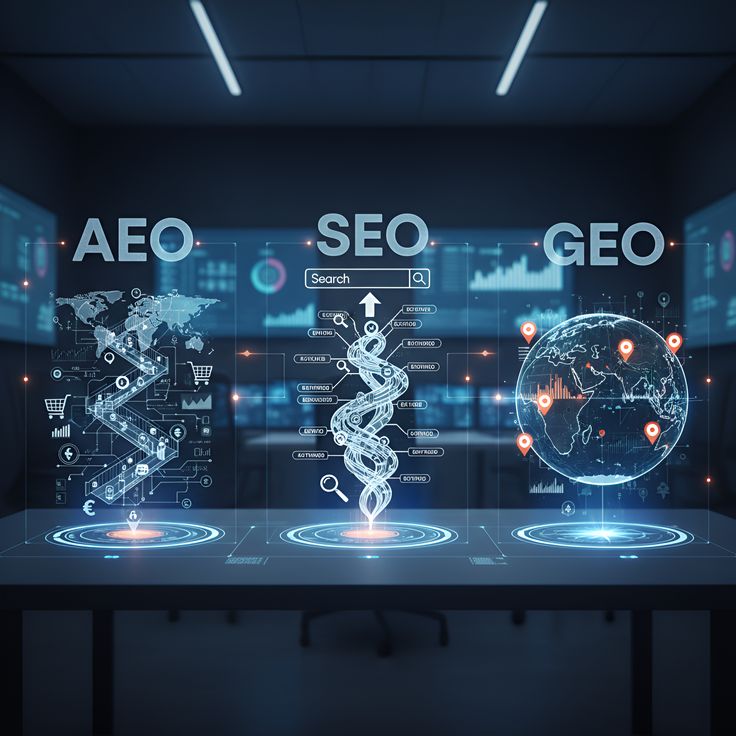
SEO vs AEO vs GEO: Complete Comparison
| SEO (Search Engine Optimization) | AEO (Answer Engine Optimization) | GEO (Generative Engine Optimization) |
|---|---|---|
| Optimizes websites for Google and Bing search rankings. | Optimizes content to become the direct answer in AI and voice search. | Optimizes content so AI tools like ChatGPT, Gemini, and Perplexity cite your brand in generated responses. |
| Focuses on keywords and organic traffic. | Focuses on answering user questions clearly and accurately. | Focuses on AI search optimization, context, authority, and credibility. |
| Goal is to rank higher in search results. | Goal is to appear in featured snippets, AI Overviews, and voice assistants. | Goal is to be referenced in AI-generated answers. |
| Success measured by rankings, clicks, and website traffic. | Success measured by answer visibility and user engagement. | Success measured by AI mentions, citations, and brand visibility. |
| Best for increasing organic website visitors. | Best for improving visibility in answer engines. | Best for future-proofing your brand in AI-powered search. |
Why AI Search Optimization Matters in 2026
AI Search Optimization is the combination of SEO, AEO, and GEO.
Instead of optimizing only for Google rankings, businesses now optimize for:
- AI-generated answers
- Conversational search
- Voice search
- Search engines
- Large Language Models (LLMs)
- AI assistants
In simple words:
AI Search Optimization prepares your website for both traditional search engines and modern AI platforms.
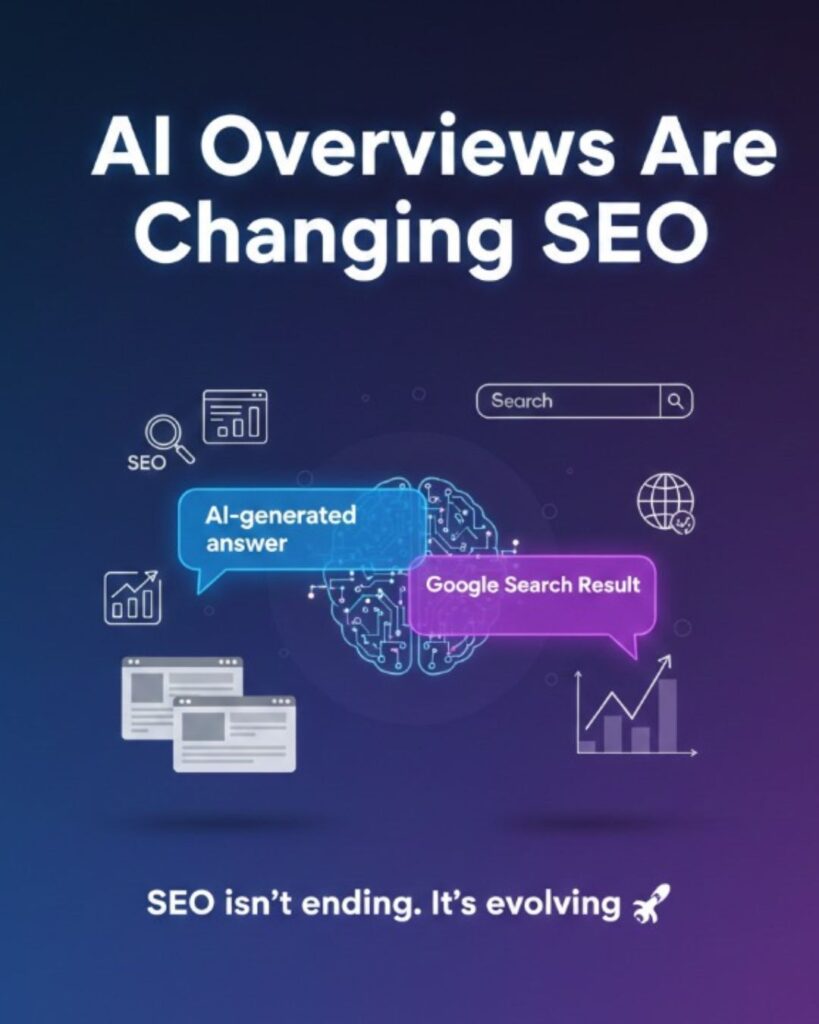
Why SEO Alone Is No Longer Enough
Many businesses still rely only on traditional SEO.
That approach worked well in previous years.
However, search behavior has changed significantly.
Today:
- Users ask complete questions.
- AI provides instant summaries.
- Zero-click searches are increasing.
- Voice search continues to grow.
- Google AI Overviews answer queries without requiring users to click multiple websites.
If your website is optimized only for keywords but not for AI understanding, you could lose valuable traffic.
This is why businesses are now investing in AI Search Optimization.
Why AEO Is Becoming Essential
Answer Engine Optimization is growing because users want immediate answers.
For example:
Instead of reading five blogs, users simply ask AI:
What is the difference between SEO and GEO?
If your website explains the answer clearly, AI platforms are more likely to reference your content.
Benefits of Answer Engine Optimization include:
- Better visibility
- Featured snippets
- Voice search rankings
- Increased authority
- Higher trust
- Improved user experience
Why GEO Marketing Is the Future
Generative AI is transforming digital marketing.
Millions of users now depend on AI assistants for:
- Product recommendations
- Service providers
- Business research
- Travel planning
- Healthcare information
- Shopping decisions
When AI recommends businesses, it looks for:
- Expert content
- Trusted sources
- Accurate information
- Updated articles
- Strong website authority
This is where GEO Marketing becomes essential.
Instead of optimizing for search engines only, businesses optimize for AI-generated recommendations.
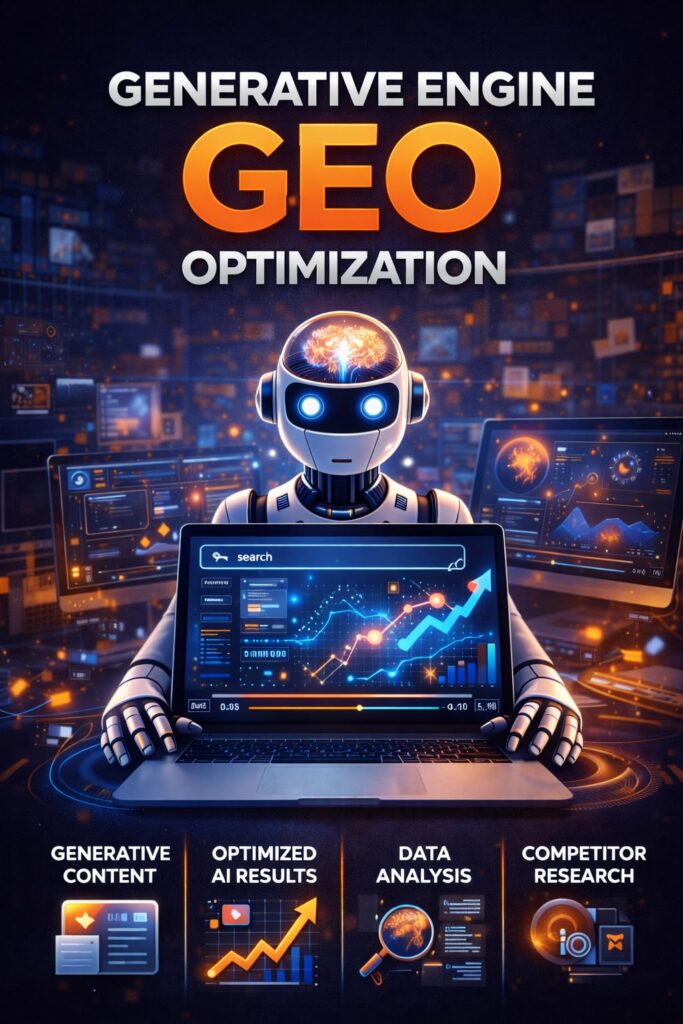
SEO vs AEO vs GEO: Which Strategy Should Your Business Choose?
The answer depends on your goals.
Choose SEO if:
- You want long-term Google rankings.
- You need organic traffic.
- Your website is still growing.
- You focus on keyword-based searches.
Choose AEO if:
- You want Featured Snippets.
- You want visibility in Google AI Overviews.
- You target voice search users.
- Your customers ask many questions before buying.
Choose GEO Marketing if:
- You want visibility in ChatGPT.
- You want AI platforms to recommend your brand.
- You want future-proof digital marketing.
- You publish expert content regularly.
The Best Strategy in 2026
The smartest businesses are not choosing only one strategy.
They combine:
- SEO
- Answer Engine Optimization
- GEO Marketing
- AI Search Optimization
This integrated approach helps brands appear:
- On Google Search
- In AI Overviews
- Inside ChatGPT
- On Gemini
- In Perplexity AI
- In Microsoft Copilot
- Through voice assistants
That means greater visibility across every modern search experience.
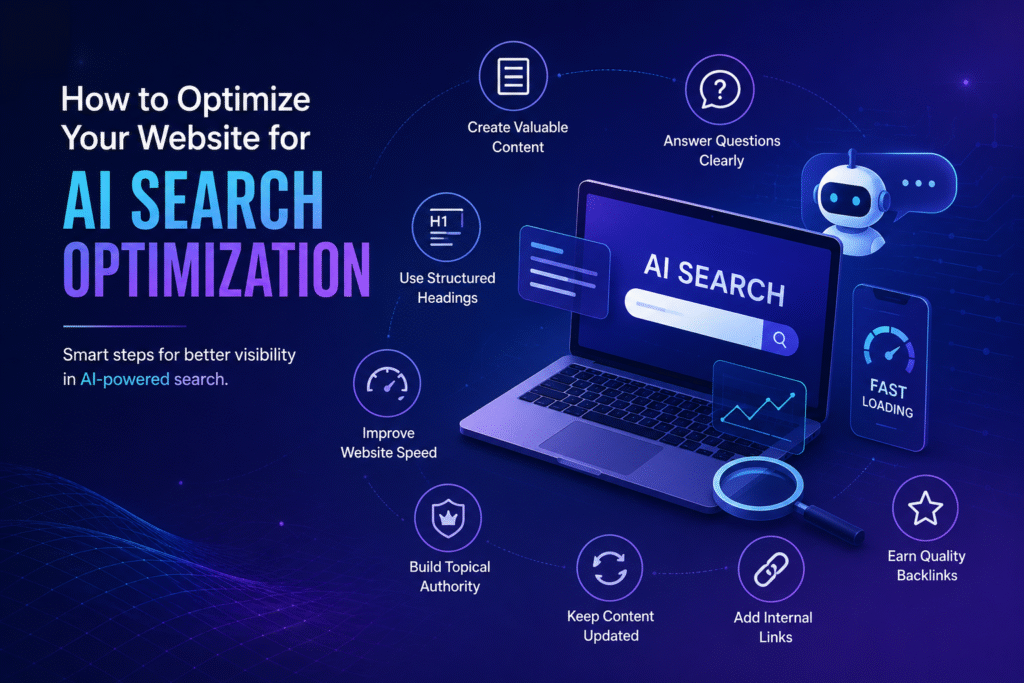
How to Optimize Your Website for AI Search Optimization
Here are proven steps your business should follow in 2026:
Create Helpful Content
Write blogs that genuinely solve customer problems instead of focusing only on keywords.
Answer Questions Clearly
Include FAQ sections and provide direct answers before adding detailed explanations.
Use Structured Headings
Organize content with proper H1, H2, and H3 tags so both users and AI can understand it easily.
Improve Website Speed
A fast, mobile-friendly website improves user experience and search performance.
Build Topical Authority
Publish multiple articles around the same niche to demonstrate expertise.
Keep Content Updated
AI systems prefer fresh, accurate, and relevant information.
Add Internal Links
Connect related blogs to help users and search engines navigate your website.
Earn Quality Backlinks
Mentions from trusted websites strengthen your authority and improve rankings.
Common Mistakes Businesses Make
Many businesses unknowingly limit their visibility by making these mistakes:
- Writing only for search engines instead of users
- Ignoring AI search trends
- Using outdated SEO tactics
- Publishing thin or duplicate content
- Skipping FAQs and structured data
- Not updating old blog posts
- Failing to demonstrate expertise and trust
Avoiding these issues will improve both traditional and AI search performance.
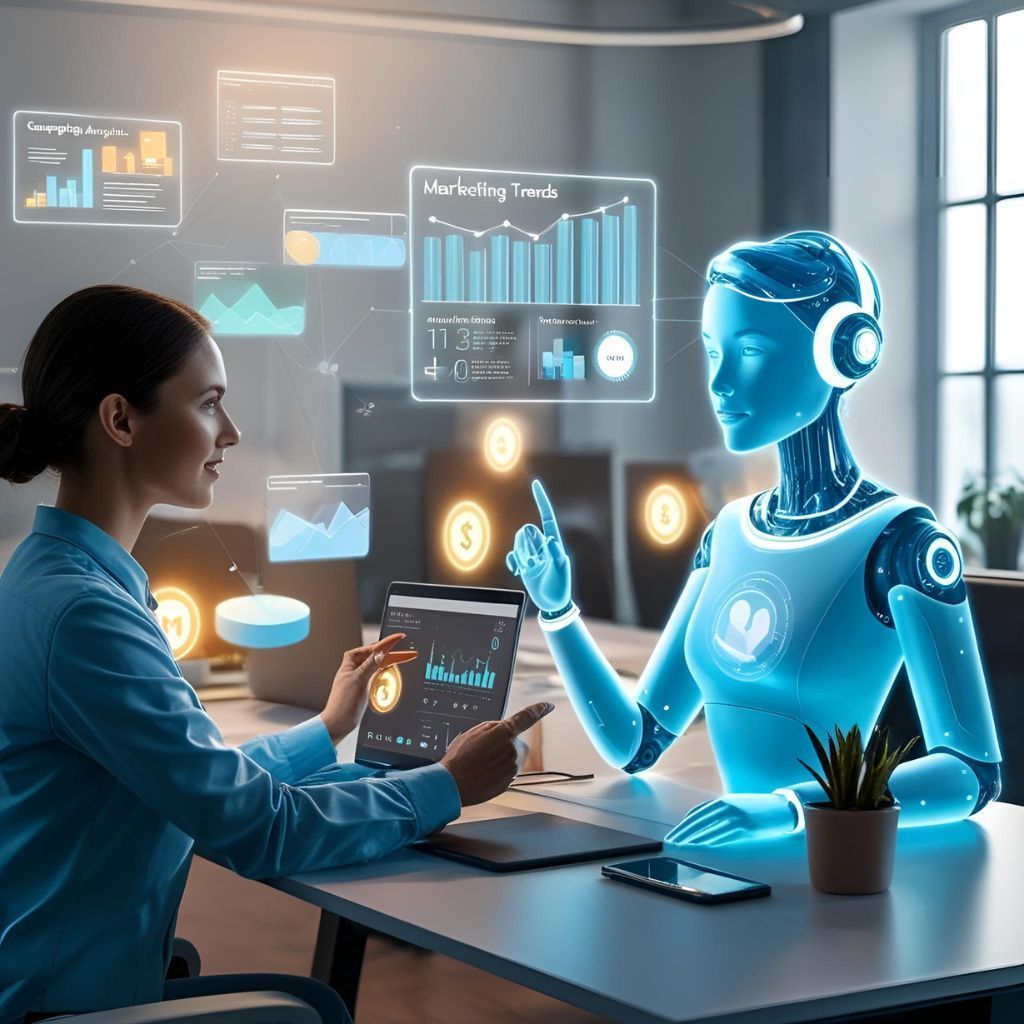
Future of Search in 2026
Search is no longer limited to Google.
Users now expect instant, conversational answers from AI tools.
Businesses that adapt early will gain a strong competitive advantage.
The future belongs to brands that combine:
- Traditional SEO
- Answer Engine Optimization
- GEO Marketing
- AI Search Optimization
- High-quality, experience-driven content
Companies that embrace this shift today will be better positioned to attract organic traffic, build trust, and generate more leads tomorrow.
Final Thoughts
The debate around SEO vs AEO vs GEO isn’t about replacing one strategy with another—it’s about evolving with the way people search.
SEO continues to drive valuable organic traffic, Answer Engine Optimization helps your content appear in direct answers, and GEO Marketing increases your chances of being recommended by AI-powered platforms.
In 2026, businesses that integrate all three strategies into a unified AI Search Optimization plan will be the ones that stand out in both traditional search results and AI-generated experiences.
If your goal is sustainable growth, higher visibility, and quality leads, now is the time to optimize your website not only for search engines but also for the AI tools your customers are already using.
The future of digital marketing belongs to businesses that are ready for the next generation of search.
Frequently Asked Questions (FAQs)
What is the difference between SEO and AEO?
SEO focuses on improving rankings in search engines like Google, while Answer Engine Optimization focuses on providing direct answers for AI search, voice assistants, and featured snippets.
What is GEO Marketing?
GEO Marketing (Generative Engine Optimization) is the process of optimizing your content so AI platforms like ChatGPT, Gemini, and Perplexity AI can understand, trust, and recommend your business.
Is SEO still relevant in 2026?
Yes. SEO remains a critical part of digital marketing. However, combining it with AEO and AI Search Optimization delivers stronger results in today’s AI-driven search landscape.
Why is AI Search Optimization important?
AI Search Optimization helps your website perform well across search engines, AI assistants, and conversational search platforms, increasing your visibility and future-proofing your digital marketing strategy.
Should small businesses invest in SEO, AEO, and GEO?
Absolutely. Small businesses can gain a competitive edge by combining SEO, Answer Engine Optimization, and GEO Marketing to reach customers across both traditional and AI-powered search experiences.
Social Media Is the New Search Engine: How Brands Get Customers from Instagram & YouTube (2026 Guide)
Gone are the days when people searched only on Google. Today, millions of users directly search on Instagram, YouTube, and other social media platforms before making a buying decision.
Whether someone wants the best smartphone, a nearby café, a digital marketing agency, or even a product review, they often open Instagram or YouTube instead of Google.
This shift has completely changed digital marketing.
Businesses that understand social media search are getting more visibility, more engagement, and more customers without spending huge advertising budgets.
Keywords be like –
In this blog, you’ll learn why social media is becoming the new search engine, how Instagram SEO and YouTube marketing strategy work, and how your business can use social media discovery marketing to stay ahead of competitors.
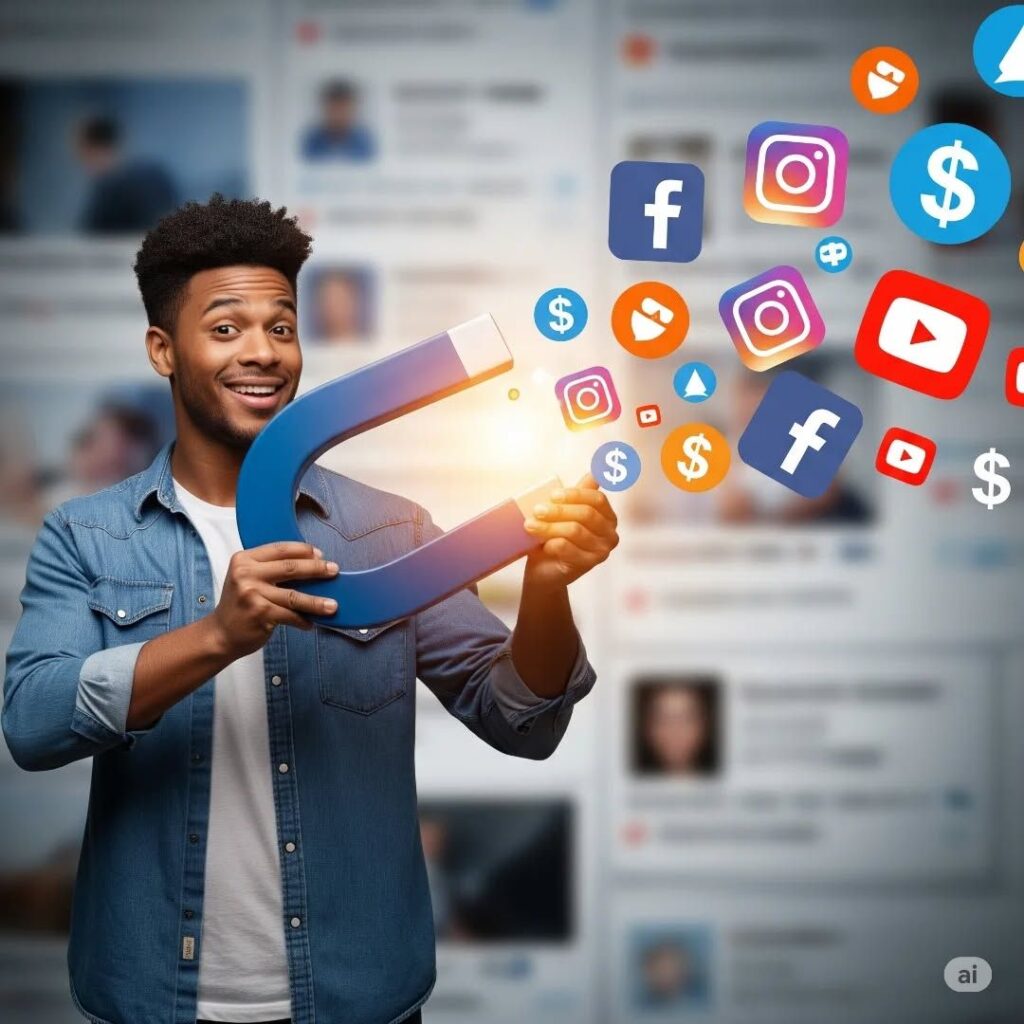
Why Social Media Has Become the New Search Engine
The way people search online has changed dramatically.
Instead of typing everything into Google, users now search directly on:
- YouTube
- TikTok (globally)
For example:
Instead of searching on Google:
People now search directly on Instagram to check:
- Customer reviews
- Portfolio
- Before-after results
- Client testimonials
- Reels
- Business profile
Similarly, instead of reading long articles, users search YouTube for:
- Tutorials
- Product comparisons
- Reviews
- Buying guides
- How-to videos
This is called social media search, and it’s becoming one of the biggest marketing trends in 2026.
Why Consumers Trust Instagram & YouTube More Than Traditional Search
People don’t just want information anymore.
They want proof.
Social media provides:
- Real customer experiences
- Video demonstrations
- Live product usage
- User-generated content
- Honest reviews
- Behind-the-scenes videos
A 30-second Reel often builds more trust than a long webpage because people can actually see the product in action.
That’s why Instagram SEO and YouTube marketing strategy have become essential for businesses.
What Is Instagram SEO?
Understanding Instagram SEO
Many businesses think Instagram is only for posting photos.
That’s no longer true.
Instagram now works like a search engine.
When users search keywords like:
- Interior Designer
- Salon Near Me
- Digital Marketing
- Real Estate
- Café Delhi
Instagram shows the most relevant profiles, posts, Reels, and videos.
This happens through Instagram SEO.
Simply put,
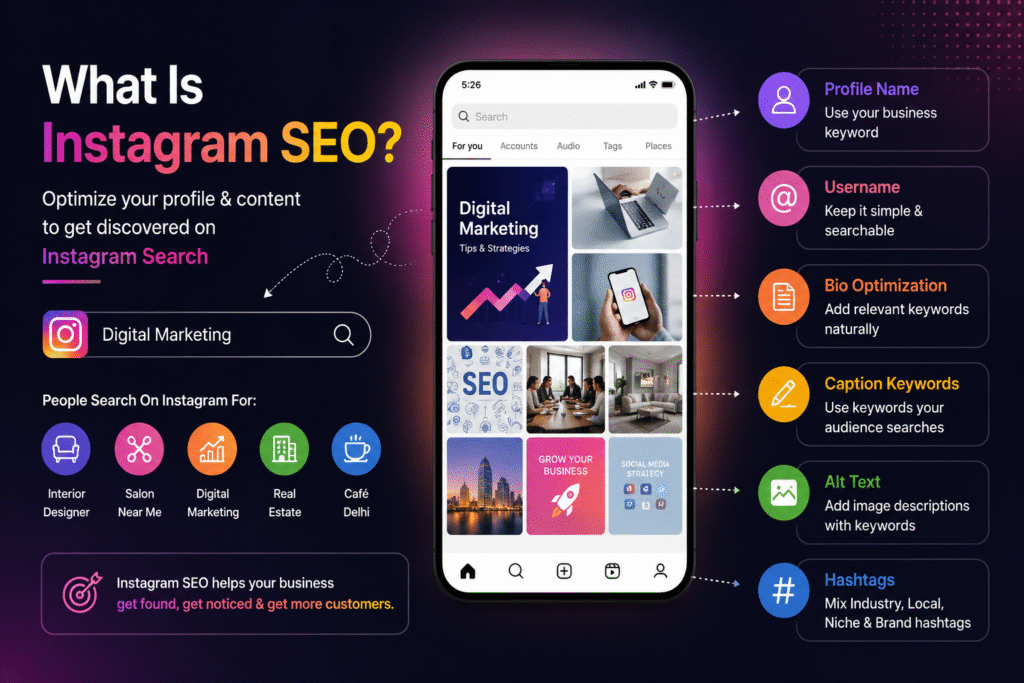
Instagram SEO means optimizing your Instagram profile and content so people can easily discover your business through Instagram search.
How Instagram SEO Works
Instagram ranks content using several factors:
Profile Name
Include your business keyword.
Example:
❌ ABC Agency
✅ ABC Digital Marketing Agency
Username
Keep it simple and searchable.
Example:
@ClickbooostDigital
instead of
@click123xyz
Bio Optimization
Add relevant keywords naturally.
Example:
Website Design | SEO | Meta Ads | Social Media Marketing | Delhi
Caption Keywords
Instead of writing random captions, include keywords your audience searches for.
Example:
If you’re posting about SEO services, naturally include phrases like:
- Instagram SEO
- Social Media Search
- Digital Marketing
- SEO Services
Alt Text
Instagram now allows image descriptions.
Adding relevant keywords improves discoverability.
Hashtags
Don’t use only viral hashtags.
Mix:
- Industry hashtags
- Local hashtags
- Niche hashtags
- Brand hashtags
Why Reels Are Dominating Social Media Search
Short videos are everywhere.
Instagram Reels receive significantly more engagement than static posts because they are designed to reach users who don’t already follow your account.
People now search:
- Marketing Tips
- Website Design
- Fitness
- Recipes
- Home Decoration
and Instagram often recommends Reels first.
This makes Reels marketing one of the best ways to increase reach.
Best Reels Marketing Tips
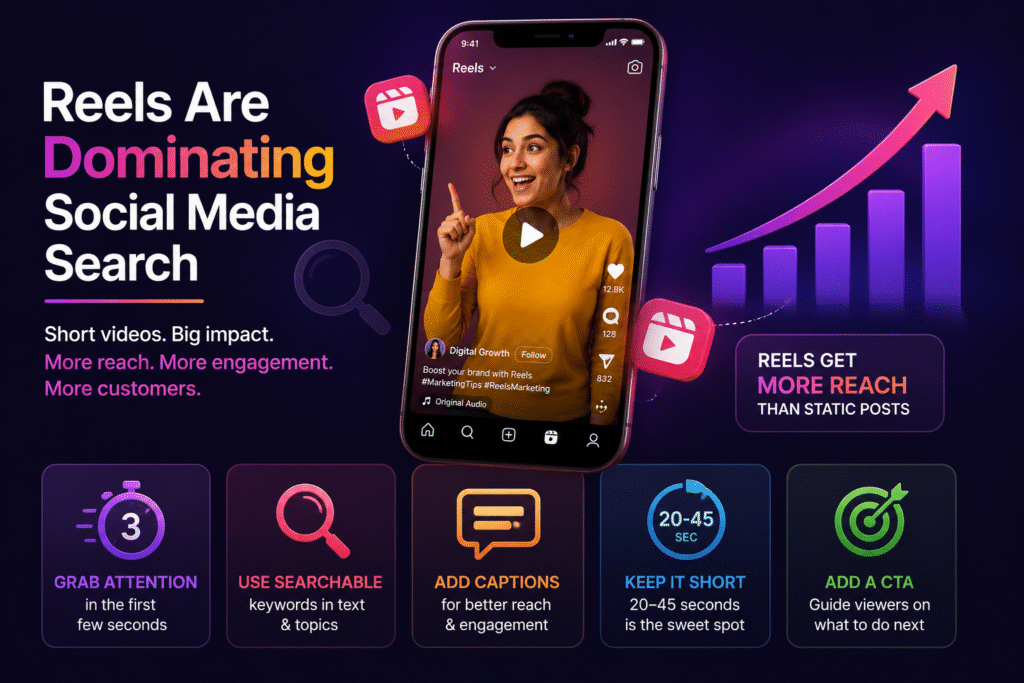
Hook Viewers in First 3 Seconds
Start with:
- Did You Know…
- Stop Making This Mistake…
- Here’s Why…
Add Searchable Text
Your video should contain keywords like:
Instagram SEO
Digital Marketing
Social Media Search
Website Design
Use Captions
Many people watch videos without sound.
Captions improve engagement.
Keep Videos Short
The sweet spot is usually:
20–45 seconds
Add CTA
Examples:
- Follow for Marketing Tips
- Save This Post
- Visit Our Website
- DM Us Today
YouTube Is the World’s Second Largest Search Engine
Google owns YouTube.
Every day, billions of searches happen on YouTube.
Users search:
- How to Start Business
- SEO Tutorial
- Website Design
- Digital Marketing Course
- Product Review
Unlike social media posts that disappear quickly, YouTube videos continue generating traffic for months or even years.
That’s why every business needs a strong YouTube marketing strategy.
What Makes a Successful YouTube Marketing Strategy?
Create Videos That Solve Problems
Don’t only promote your services.
Instead create videos answering customer questions.
Examples:
- How Instagram SEO Works
- Best Website Design Tips
- Google Ads vs Meta Ads
- SEO Mistakes Businesses Make
Helpful content builds trust and keeps viewers engaged.
Optimize Video Titles
Bad Title:
Marketing Tips
Better Title:
Instagram SEO Tips to Grow Your Business in 2026
Use keywords naturally.
Write Keyword-Rich Descriptions
Include:
- Main keyword
- Related keywords
- Website link
- Contact details
Descriptions help YouTube understand your content.
Design Attractive Thumbnails
A strong thumbnail increases click-through rates.
Use:
- Bold text
- Clear images
- High contrast
- Emotional expressions
Encourage Watch Time
The longer people watch your videos, the more YouTube recommends them.
Keep videos engaging from beginning to end.
What Is Social Media Discovery Marketing?
Years ago,
Businesses waited for customers to search.
Today,
Platforms themselves recommend your content to interested users.
This is called Social Media Discovery Marketing.
Instead of waiting for people to find you, Instagram and YouTube push your content to users based on:
- Interests
- Behavior
- Search history
- Engagement
- Location
This creates huge opportunities for businesses.
How Brands Get Customers Through Social Media Search
Businesses today generate leads through:
Educational Content
Teaching builds authority.
Customer Testimonials
People trust other customers.
Product Demonstrations
Videos increase buying confidence.
Behind-the-Scenes Content
Makes your brand more human.
Common Mistakes Businesses Make
Many businesses still use outdated strategies.
Avoid these mistakes:
Ignoring Instagram SEO
Without optimization, fewer people discover your content.
Posting Without Keywords
Every caption should include searchable keywords naturally.
No Video Content
Video consistently performs better than images across most platforms.
Inconsistent Posting
Consistency builds trust with both users and platform algorithms.
No Clear Call-to-Action
Always tell viewers what to do next.
Examples:
- Visit Website
- Call Now
- Book Consultation
- Send Message
Social Media Search Best Practices for 2026
To stay ahead in 2026:
- Optimize every Instagram profile.
- Use keyword-focused captions.
- Publish Reels consistently.
- Create educational YouTube videos.
- Add subtitles to videos.
- Design professional thumbnails.
- Answer audience questions.
- Track analytics regularly.
- Focus on value instead of only promotions.
- Maintain a consistent content schedule.
These strategies improve your visibility in social media search while helping you build trust and attract quality leads.
Why Every Business Needs Instagram SEO & YouTube Marketing Strategy
Whether you own:
- Restaurant
- Salon
- Real Estate Agency
- Coaching Institute
- Clothing Brand
- Hospital
- Gym
- Interior Design Company
- Travel Agency
- Digital Marketing Agency
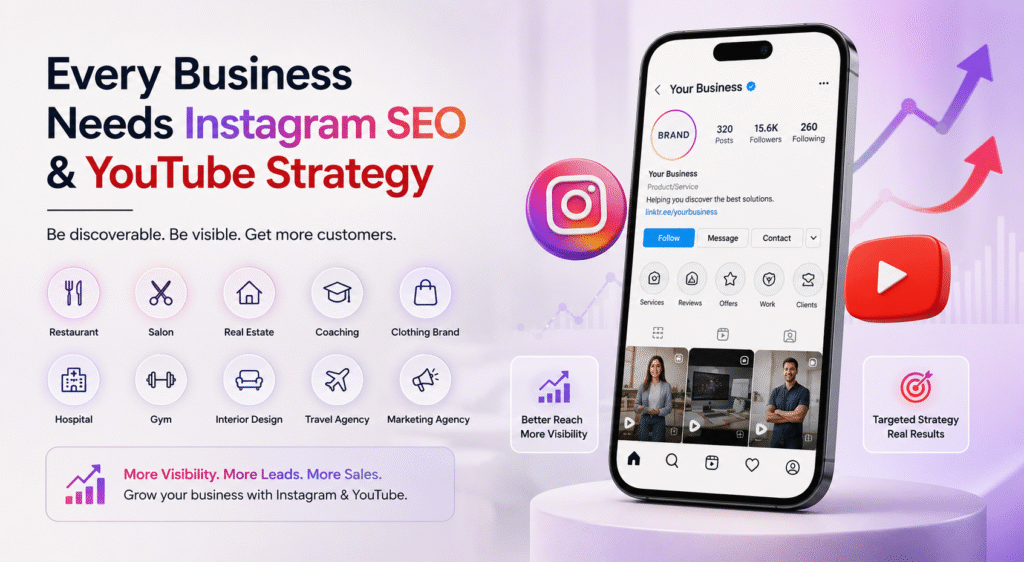
Your potential customers are already searching on Instagram and YouTube.
If your business isn’t optimized for social media search, you’re likely missing valuable traffic, leads, and sales.
Investing in Instagram SEO, creating a strong YouTube marketing strategy, and using social media discovery marketing can significantly improve your online presence and help your brand grow organically.
Final Thoughts
The future of search is no longer limited to Google.
Today’s customers discover brands through Instagram Reels, YouTube videos, creator recommendations, and social media communities before making a purchase.
Businesses that optimize for social media search are building stronger brand awareness, increasing engagement, and generating more qualified leads than those relying only on traditional SEO.
Start optimizing your Instagram profile, create valuable Reels, publish educational YouTube videos, and focus on solving your audience’s problems. By combining Instagram SEO, a well-planned YouTube marketing strategy, and social media discovery marketing, your business can stay visible where modern customers are already searching.
If you want to grow your brand online, now is the perfect time to make social media an essential part of your overall SEO and digital marketing strategy.
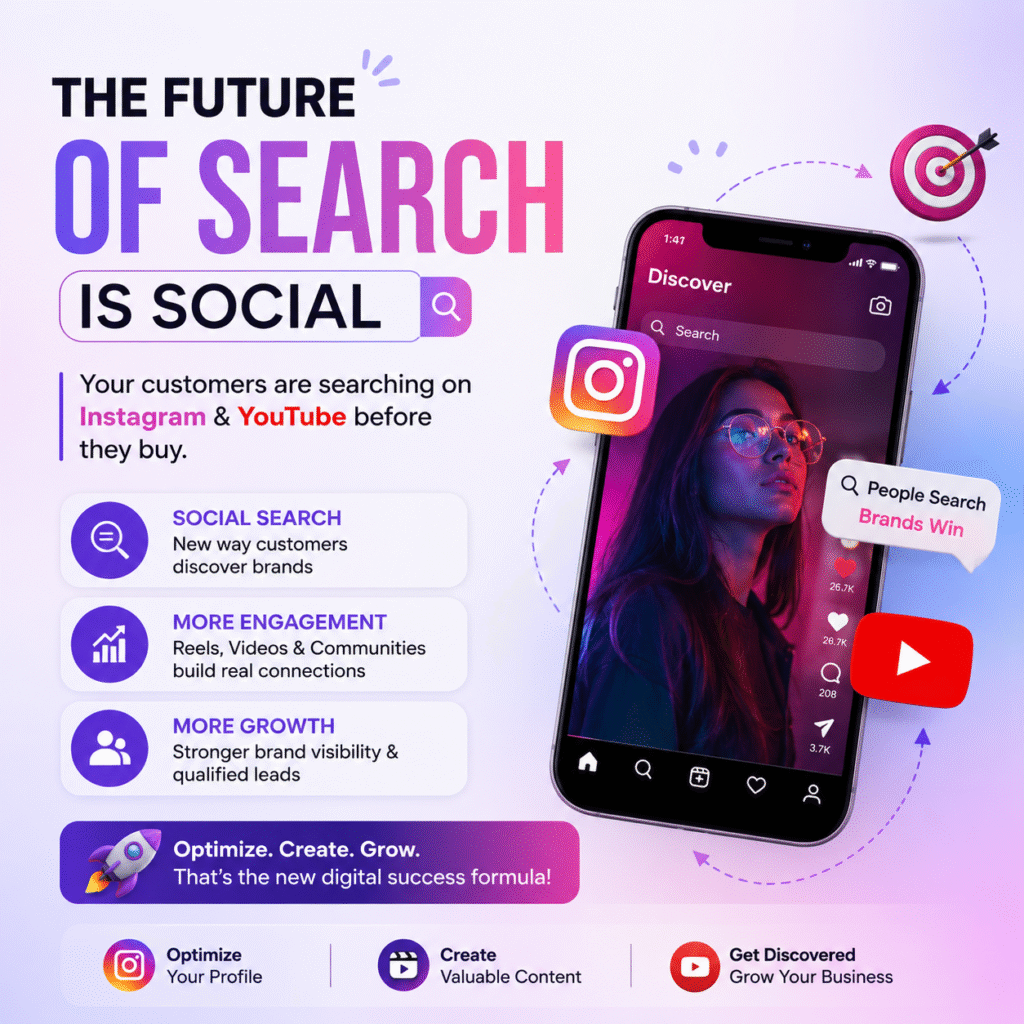
SEO Keywords Used Naturally
- Social Media Search
- Instagram SEO
- YouTube Marketing Strategy
- Social Media Discovery Marketing
- Instagram Search Optimization
- YouTube SEO
- Reels Marketing
- Short Video Marketing
- Social Media Search Engine
- Digital Marketing Trends 2026
FAQs
1. What is social media search?
Social media search is the process of finding products, services, reviews, or businesses directly on platforms like Instagram, YouTube, Facebook, and LinkedIn instead of using traditional search engines.
2. What is Instagram SEO?
Instagram SEO is the practice of optimizing your profile, captions, hashtags, keywords, and content so your business appears in Instagram search results and reaches more potential customers.
3. Why is YouTube important for digital marketing?
YouTube is the world’s second-largest search platform, making it an excellent channel for sharing educational content, product reviews, tutorials, and brand stories that continue attracting traffic over time.
4. What is social media discovery marketing?
Social media discovery marketing focuses on creating content that platform algorithms recommend to users based on their interests, helping brands reach new audiences organically.
5. Can small businesses benefit from Instagram SEO and YouTube marketing?
Yes. Small businesses can increase brand visibility, attract local customers, build trust, and generate leads by consistently applying Instagram SEO and a well-planned YouTube marketing strategy.
AI in Digital Marketing: How Automation Is Changing Ads, SEO, and Content in 2026
Artificial Intelligence (AI) is no longer a futuristic concept—it’s the driving force behind modern digital marketing. From creating engaging content to optimizing advertising campaigns and improving search engine rankings, AI in digital marketing is transforming how businesses connect with their audience.
As we move through digital marketing trends 2026, companies of all sizes are using AI marketing tools to save time, reduce costs, and achieve better results. Whether you’re a startup, local business, or established brand, AI can help you automate repetitive tasks, personalize customer experiences, and make smarter marketing decisions.
In this blog, we’ll explore how marketing automation 2026 is reshaping advertising, SEO, content creation, and customer engagement. You’ll also learn the best AI tools, benefits, challenges, and practical tips to stay ahead of your competitors.
Why AI in Digital Marketing Matters in 2026
The digital marketing industry has evolved significantly over the last few years. Consumers expect personalized experiences, instant responses, and highly relevant content. Meeting these expectations manually is becoming nearly impossible.
This is where AI in digital marketing plays a crucial role.
Artificial Intelligence helps marketers analyze massive amounts of data within seconds. Instead of relying on guesswork, businesses can now make data-driven decisions that improve campaign performance and customer satisfaction.
Some major benefits include:
- Faster campaign optimization
- Better customer targeting
- Higher conversion rates
- Automated content creation
- Improved return on investment (ROI)
- Smarter SEO strategies
Businesses adopting AI advertising strategy are already outperforming competitors who still rely solely on traditional marketing methods
How AI Is Changing Digital Advertising
1. Smarter Audience Targeting
One of the biggest advantages of AI in digital marketing is advanced audience targeting.
AI analyzes customer behavior, demographics, interests, purchase history, and browsing patterns to identify the most valuable audience segments.
Instead of showing ads to everyone, AI ensures your ads reach people who are more likely to convert.
Benefits include:
- Lower advertising costs
- Higher click-through rates
- Better lead quality
- Increased sales
This makes AI an essential part of every successful AI advertising strategy.
2. Automated Campaign Optimization
Gone are the days when marketers manually adjusted bids and budgets every few hours.
Modern AI marketing tools automatically optimize:
- Ad placements
- Bidding strategies
- Budget allocation
- Audience segmentation
- Ad scheduling
Platforms like Google Ads and Meta Ads now use machine learning to improve campaign performance continuously.
This automation allows marketers to focus more on strategy rather than repetitive tasks.
3. AI-Powered Ad Creatives
Creating multiple ad copies and visuals used to consume hours of work.
Today, AI tools can generate:
- Headlines
- Primary texts
- Call-to-action buttons
- Image suggestions
- Video scripts
These tools test different creative combinations and automatically select the best-performing ads.
This makes marketing automation 2026 faster, smarter, and more efficient.
AI in SEO: The Future of Google Rankings
.
Search Engine Optimization is also experiencing a major transformation.
Google increasingly rewards content that is helpful, relevant, and user-focused. AI helps marketers create exactly that.
1. AI Keyword Research
Finding profitable keywords manually is time-consuming.
Modern AI marketing tools can instantly identify:
- High-volume keywords
- Long-tail keywords
- Low-competition opportunities
- User search intent
- Trending search queries
For example, keywords like:
- AI in digital marketing
- digital marketing trends 2026
- local SEO strategy
- Google ranking tips
- AI advertising strategy
- social media SEO
2. AI Content Optimization
AI doesn’t just generate content—it helps improve it.
Advanced SEO tools now recommend:
- Better headings
- Internal linking opportunities
- Readability improvements
- Keyword placement
- Meta title optimization
- Meta description suggestions
This helps websites improve their Google rankings while maintaining a better user experience.
AI in Content Marketing
Content remains one of the most powerful marketing strategies.
However, producing high-quality content consistently can be challenging.
This is where AI in digital marketing becomes invaluable.
Faster Blog Writing
AI assists writers by generating:
- Blog outlines
- Content ideas
- SEO-friendly headings
- Meta descriptions
- FAQs
- Keyword suggestions
Instead of replacing human creativity, AI enhances productivity.
Professional content writers still add experience, storytelling, originality, and brand voice.
AI for Social Media Content
Managing multiple social media platforms can be overwhelming.
AI tools help create:
- Instagram captions
- Facebook posts
- LinkedIn articles
- Reels ideas
- Hashtags
- Posting schedules
Combined with social media SEO, businesses can increase visibility across platforms.
Best AI Marketing Tools in 2026
Several AI-powered tools are changing digital marketing.
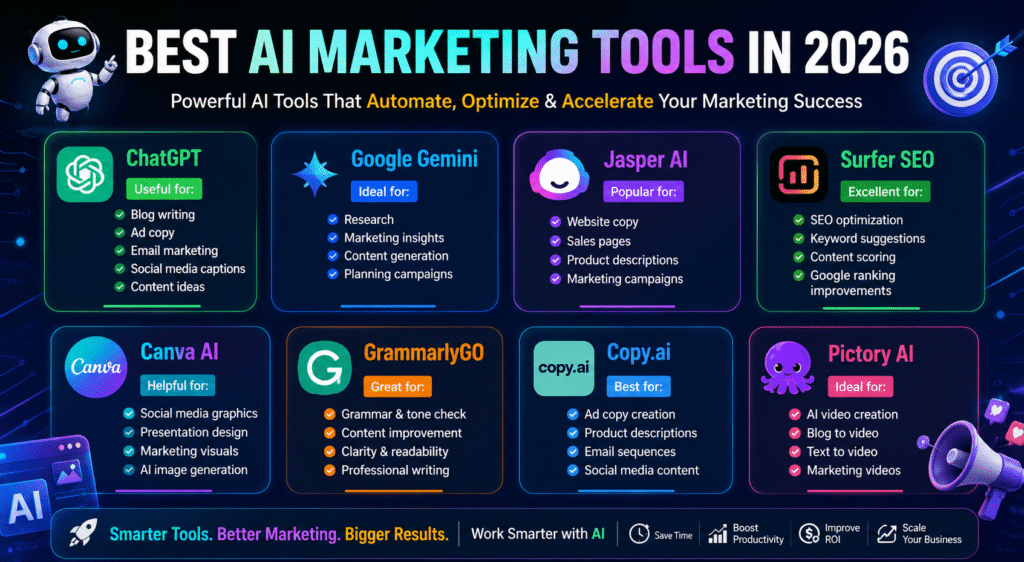
Popular options include:
1. ChatGPT
Useful for:
- Blog writing
- Ad copy
- Email marketing
- Social media captions
- Content ideas
2. Google Gemini
Ideal for:
- Research
- Marketing insights
- Content generation
- Planning campaigns
3. Surfer SEO
Excellent for:
- SEO optimization
- Keyword suggestions
- Content scoring
- Google ranking improvements
4. Canva AI
Helpful for:
- Social media graphics
- Presentation design
- Marketing visuals
- AI image generation
These AI marketing tools allow businesses to scale content production without compromising quality.
Challenges of AI in Digital Marketing
Despite its many advantages, AI has certain limitations.
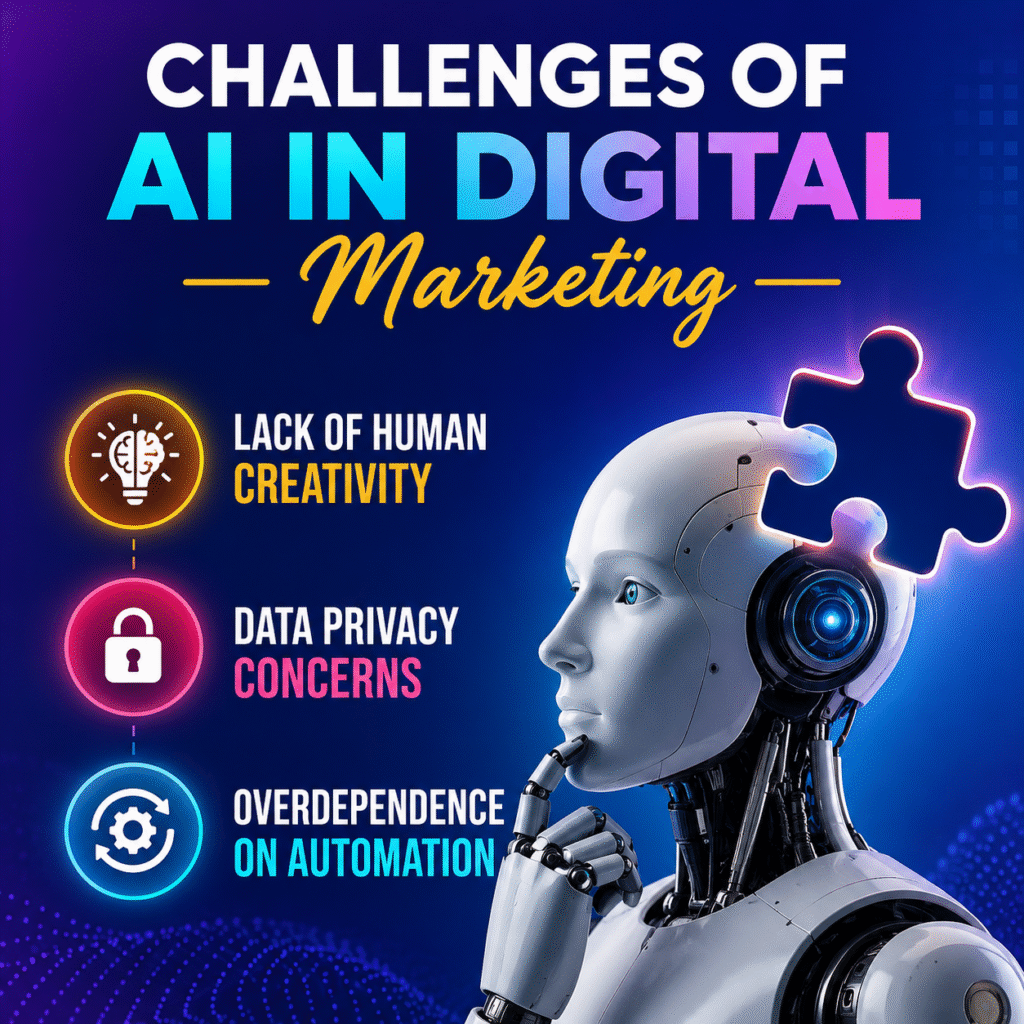
Lack of Human Creativity
AI can generate content quickly but may struggle with emotional storytelling and unique brand personality.
Human editing remains essential.
Data Privacy Concerns
Businesses must ensure responsible use of customer data while complying with privacy regulations.
Transparency builds customer trust.
Overdependence on Automation
Relying entirely on AI can make content feel repetitive.
The best marketing combines AI efficiency with human expertise.
Tips to Use AI Effectively
To maximize results, businesses should follow these best practices:
Use AI for research and automation, but let experienced marketers refine the final output.
Focus on Helpful Content
Google rewards content that genuinely solves user problems.
Avoid publishing AI-generated articles without editing.
Optimize for Search Intent
Understanding why people search is more important than simply adding keywords.
Create content that answers real questions.
Monitor Performance
Regularly analyze:
- Organic traffic
- Keyword rankings
- Conversion rates
- Bounce rates
- Engagement metrics
AI can help interpret this data and suggest improvements.
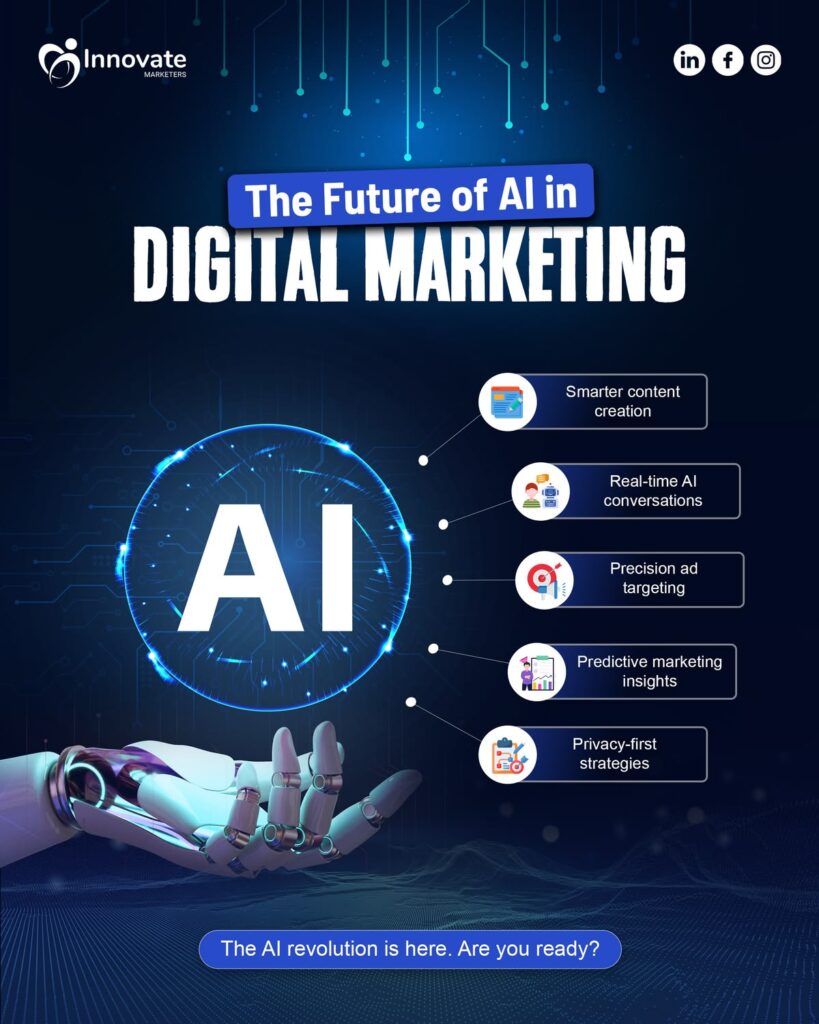
Future of AI in Digital Marketing
The future looks incredibly promising.
Over the next few years, AI will become even more integrated into marketing.
Expected developments include:
- Hyper-personalized advertising
- Voice search optimization
- AI-generated videos
- Predictive customer analytics
- Automated customer journeys
- Advanced chatbots
- Smarter SEO recommendations
Businesses that embrace these innovations early will enjoy stronger brand visibility and sustainable growth.
Final Thoughts
There’s no doubt that AI in digital marketing is redefining how businesses advertise, rank on Google, and create content. From intelligent audience targeting and automated advertising to advanced SEO optimization and personalized customer experiences, AI has become an essential part of modern marketing success.
However, the real power of AI lies in combining automation with human creativity.
Businesses that use AI marketing tools strategically while focusing on quality, authenticity, and customer value will stand out in the competitive digital landscape.
As digital marketing trends 2026 continue to evolve, adopting a smart AI advertising strategy, strengthening your local SEO strategy, improving social media SEO, and following proven Google ranking tips will help your business stay ahead of the competition.
If you’re looking to grow your brand online, now is the perfect time to embrace AI-powered marketing and unlock new opportunities for traffic, leads, and long-term business success.
Frequently Asked Questions (FAQs)
What is AI in digital marketing?
AI in digital marketing refers to using artificial intelligence to automate tasks such as advertising, SEO, content creation, audience targeting, customer support, and marketing analytics.
2. Which AI marketing tools are best in 2026?
Some of the best AI marketing tools include ChatGPT, Google Gemini, Jasper AI, Surfer SEO, Canva AI, and other automation platforms that help with content creation, SEO, and campaign optimization.
3. Can AI improve SEO rankings?
Yes. AI helps with keyword research, content optimization, technical SEO, search intent analysis, and performance tracking, making it easier to improve Google rankings.
4. Is AI replacing digital marketers?
No. AI is assisting marketers by automating repetitive tasks, but human creativity, strategy, storytelling, and decision-making remain essential.
5. Why is AI important for digital marketing in 2026?
AI helps businesses automate campaigns, personalize customer experiences, optimize SEO, reduce marketing costs, improve ROI, and stay competitive in the rapidly evolving digital landscape.
Hello world!
Welcome to WordPress. This is your first post. Edit or delete it, then start writing!